STUDIO FIELDNOTES / INVESTIGATION 03
Sounds You Can See
What does a neighborhood sound look like when we translate it into line, color and rhythm?
The artistic problem
The challenge
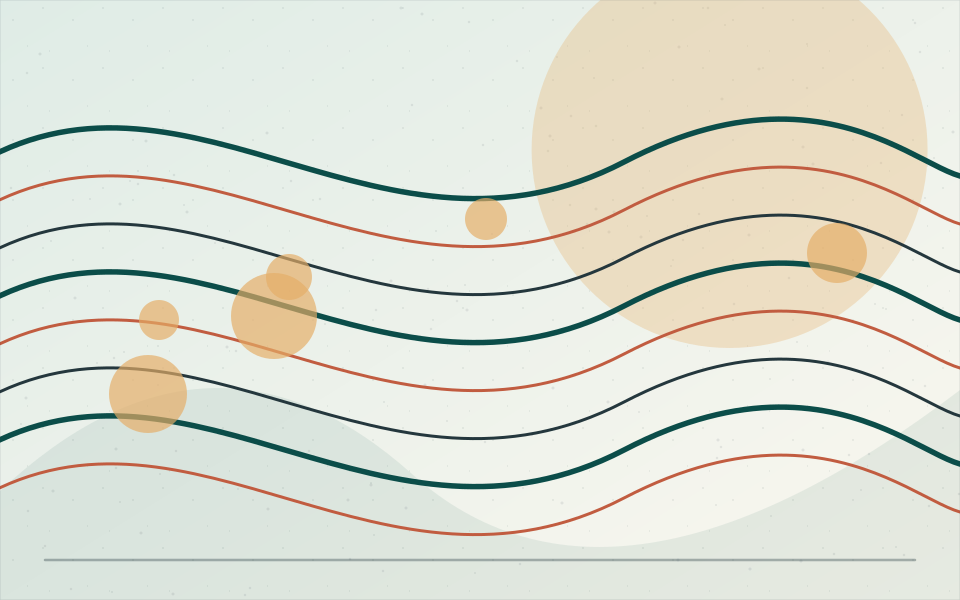
Make an original abstract composition translating a locally meaningful sound into visual marks. Use line, repeated forms, contrast and color to communicate tempo, mood and change.
Learning targets
- Translate two sound qualities into consistent visual choices.
- Create a composition with rhythm and a focal moment.
- Explain a relationship between music context and visual interpretation.
What success looks like
- At least two distinct sound-to-mark translations.
- Intentional repeated shapes or lines.
- A clear contrast or focal shift.
- A documented revision after peer interpretation.
Louisiana context
New Orleans public culture includes brass bands, second lines, street musicians, church choirs, bounce music, and quiet sounds from daily life. Each has distinct origins and social contexts; no single sound stands for the whole city.
Inclusive practice: Students may choose a family sound, neighborhood sound, silence, home language, or an audio clip from an artist with permitted classroom use. Avoid requiring religious music or performing a cultural tradition.
Source alignment
Louisiana Grade 3–4: VA-CE-E3, VA-CE-E6, VA-HP-E3; Grade 5 (5–8 cluster): VA-CE-M3, VA-CE-M6
Studio Habits of Mind: Observe, Express, Develop Craft, Reflect
The studio arc
From first idea to finished work
The complete teacher guide includes day-by-day checkpoints, demonstrations, differentiation and an analytic rubric.
Engage
Make quick lines to three unlike sounds or described sensations; compare distinct interpretations without ranking them.
Investigate
Listen to or describe contrasting local sound environments; identify context, performer or source when known.
Skill Studio
Model line weight, rhythm, scale, layered color, and change in marks over time. Show multiple sample translations, not finished templates.
Generate
Generate three different sketches using one sound; each changes pattern, focal point or palette.
Plan
Choose the strongest sketch and label how two art elements relate to the chosen sound.
Produce
Create large composition, controlling repeated shapes and dramatic variation.
Critique
Partners interpret the pictured rhythm without being told the source; cite visual evidence.
Revise
Make one change so the intended rhythm or mood reads more clearly.
Present
Display with a title and a contextual note crediting the source of the sound.
Reflect
Explain one successful translation and one element to refine in a future composition.
Evidence of growth
What learning looks like
Before
Observe initial thinking: At least two sound qualities translated.
During
Check student-generated plans, use targeted skill conferences, and document one meaningful revision.
After
Use the five-category, four-level rubric and student reflection to name what changes in the next artwork.
Respect the cultural context
Do not treat second lines as generic party music. Attribute specific artists and contexts. Respect audio rights and let students choose nonpublic or personally meaningful sounds.
Ready to teach it?
Take the packet, adapt materials to your classroom, and keep the artistic thinking rigorous.